
DH2026 Opening Keynote: 두 판 사이의 차이

| (사용자 2명의 중간 판 62개는 보이지 않습니다) | |||
| 1번째 줄: | 1번째 줄: | ||
<center> | <indicator name="DH2026">[[File:DH2026 logo.png|90px]]</indicator> | ||
=Teaching AI, Training Ourselves:<br/>A New Mission for Digital Humanities= | <div style="background-color: #1a365d; color: #ffffff; padding: 28px 24px; border-radius: 8px; margin-bottom: 24px; text-align: center; box-shadow: 0 4px 6px rgba(0,0,0,0.1);"> | ||
DH2026 Opening Keynote< | <div style="font-size: 20pt; font-weight: bold; line-height: 1.3; margin-bottom: 12px; color: #ffffff;">Teaching AI, Training Ourselves:<br/><span style="font-size: 16pt; font-weight: normal; color: #e2e8f0;">A New Mission for Digital Humanities</span></div> | ||
Tue, July 28, 2026 · 18:00 · Grand Ballroom | <div style="font-size: 12pt; color: #cbd5e0; margin-bottom: 8px; font-weight: bold;">DH2026 Opening Keynote</div> | ||
</ | <div style="font-size: 11pt; color: gold; line-height: 1.5;"> | ||
[https://dh2026.adho.org/kim-hyeon/ | "The reason the study of the classics must continue in the age of AI is not that it preserves the past, but that it is training for the future: training for humans to remain human." | ||
</div> | |||
Tue, July 28, 2026 · 18:00 · Grand Ballroom, DCC</br>Daejeon, South Korea | |||
< | </div> | ||
<div style="text-align: right; margin-bottom: 20px; font-size: 11pt; font-weight: bold;"> | |||
Keynote Speaker: [https://dh2026.adho.org/kim-hyeon/ Kim Hyeon] | |||
</div> | |||
== Keynote Materials == | |||
<gallery mode="packed" heights="100" caption="Lecture Resources & Links"> | |||
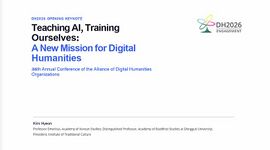
DH2026 Keynote slide.jpg | link=https://public.aks.ac.kr/~tutor/pdf/2026/DH2026_Keynote_Slide.pdf | [https://public.aks.ac.kr/~tutor/pdf/2026/DH2026_Keynote_Slide.pdf Presentation Slides (PDF)] | |||
DH2026 Keynote cover.jpg | link=https://kstoryhub.visualasia.com/classics/wiki/index.php?title=DH2026_Opening_Keynote_English | [https://kstoryhub.visualasia.com/classics/wiki/index.php?title=DH2026_Opening_Keynote_English Lecture Manuscript (English)] | |||
DH2026 Keynote cover.jpg | link=https://kstoryhub.visualasia.com/classics/wiki/index.php?title=DH2026_Opening_Keynote_Korean | [https://kstoryhub.visualasia.com/classics/wiki/index.php?title=DH2026_Opening_Keynote_Korean 발표문 (한국어)] | |||
QnA.png | link=https://kstoryhub.visualasia.com/classics/wiki/index.php?title=DH2026_Opening_QnA | [https://kstoryhub.visualasia.com/classics/wiki/index.php?title=DH2026_Opening_QnA QnA Document] | |||
CocktailBar.jpg | link=https://public.aks.ac.kr | [https://public.aks.ac.kr Cocktail Bar] | |||
</gallery> | |||
<div style="background-color: #f8fafc; border: 1px solid #e2e8f0; border-left: 5px solid #2b6cb0; padding: 20px 24px; border-radius: 6px; margin: 24px 0; text-align: justify; line-height: 1.7;"> | |||
<div style="font-size: 14pt; font-weight: bold; color: #1a365d; margin-bottom: 12px; border-bottom: 1px solid #cbd5e0; padding-bottom: 6px;">Abstract</div> | |||
Digital Humanities has focused on extending humanistic research through computational technologies: digitizing archives, analyzing texts, visualizing networks, and expanding access to cultural knowledge. In the age of generative AI, however, AI is becoming more than a tool for research. It is increasingly an intellectual environment within which human thinking, communication, learning, and cultural activity take place. | Digital Humanities has focused on extending humanistic research through computational technologies: digitizing archives, analyzing texts, visualizing networks, and expanding access to cultural knowledge. In the age of generative AI, however, AI is becoming more than a tool for research. It is increasingly an intellectual environment within which human thinking, communication, learning, and cultural activity take place. | ||
| 16번째 줄: | 37번째 줄: | ||
This keynote argues that the future mission of Digital Humanities is not simply to apply AI to the humanities or preserve traditional scholarship in digital form. Instead, Digital Humanities must become a practical discipline of human self-formation within AI environments. | This keynote argues that the future mission of Digital Humanities is not simply to apply AI to the humanities or preserve traditional scholarship in digital form. Instead, Digital Humanities must become a practical discipline of human self-formation within AI environments. | ||
In the near term, this mission takes the form of “teaching AI humanities”: restructuring classical texts, cultural knowledge, and humanistic traditions into forms that AI can meaningfully interpret. Yet the deeper purpose of this work is not merely to improve AI. By teaching AI, humanists simultaneously train themselves to think critically, act intentionally, and engage creatively within AI-mediated worlds. This process reflects the classical East Asian idea of jiaoxue xiangzhang (敎學相長)—teaching and learning as mutual growth. | In the near term, this mission takes the form of “teaching AI humanities”: restructuring classical texts, cultural knowledge, and humanistic traditions into forms that AI can meaningfully interpret. Yet the deeper purpose of this work is not merely to improve AI. By teaching AI, humanists simultaneously train themselves to think critically, act intentionally, and engage creatively within AI-mediated worlds. This process reflects the classical East Asian idea of ''jiaoxue xiangzhang'' (敎學相長)—teaching and learning as mutual growth. | ||
As a practical example, this keynote introduces the AI Classical Translation Studies Program* and its interactive platform, CCTI (Classical Chinese Text Interpreter)**. In this educational model, scholars move beyond the role of translators to become guides who help AI engage with the complexities of classical humanistic knowledge. Through iterative cycles of interpretation, knowledge structuring, AI interaction, and critical revision, both AI and human participants develop their capacities. The project demonstrates that structuring humanistic knowledge for AI does not diminish the role of scholars; rather, it provides a practical framework for strengthening human agency in an AI-saturated world. | As a practical example, this keynote introduces the '''AI Classical Translation Studies Program'''* and its interactive platform, '''CCTI (Classical Chinese Text Interpreter)'''**. In this educational model, scholars move beyond the role of translators to become guides who help AI engage with the complexities of classical humanistic knowledge. Through iterative cycles of interpretation, knowledge structuring, AI interaction, and critical revision, both AI and human participants develop their capacities. The project demonstrates that structuring humanistic knowledge for AI does not diminish the role of scholars; rather, it provides a practical framework for strengthening human agency in an AI-saturated world. | ||
Ultimately, Digital Humanities should aim not only to preserve knowledge, but also to cultivate the human capacity to choose, interpret, question, and shape one’s own life within an AI-driven civilization. In this sense, Engagement is no longer merely participation in digital culture; it is the ongoing human practice of consciously engaging with AI while retaining the capacity for self-direction and meaningful action. | Ultimately, Digital Humanities should aim not only to preserve knowledge, but also to cultivate the human capacity to choose, interpret, question, and shape one’s own life within an AI-driven civilization. In this sense, Engagement is no longer merely participation in digital culture; it is the ongoing human practice of consciously engaging with AI while retaining the capacity for self-direction and meaningful action. | ||
<hr style="border: 0; border-top: 1px solid #e2e8f0; margin: 16px 0;"/> | |||
<div style="font-size: 9.5pt; color: #4a5568; line-height: 1.5;"> | |||
* [https://kstoryhub.visualasia.com/classics/wiki/index.php?title=AI_Classical_Translation_Studies_Program AI Classical Translation Studies Program]<br/> | |||
** [https://kstoryhub.visualasia.com/classics/wiki/index.php?title=CCTI_Manual(Eng) CCTI (Classical Chinese Text Interpreter) — Manual] | |||
</div> | |||
</div> | |||
== Event Photos == | |||
<gallery mode="packed" heights="170"> | |||
DH2026_Photo1.jpg | DH2026 Opening Ceremony | |||
DH2026_Photo2.jpg | DH2026 Opening Ceremony | |||
DH2026_Photo6.jpg | DH2026 Opening Performance | |||
DH2026_Photo4C.jpg | DH2026 Opening Keynote | |||
DH2026_Photo5.jpg | DH2026 Opening Keynote | |||
DH2026_Photo3B.jpg | DH2026 Opening Keynote | |||
DH2026_Photo9.jpg | DH2026 Friends | |||
DH2026_Photo3.jpg | DH2026 Friends | |||
DH2026_Photo9B.jpg | DH2026 Friends | |||
DH2026_Photo8A.jpg | DH2026 Friends | |||
DH2026_Photo8B.jpg | DH2026 Friends | |||
DH2026 Photo3C.jpg | DH2026 Friends | |||
DH2026_Photo8.jpg | DH2026 Friends | |||
DH2026_Photo9C.jpg | DH2026 Friends | |||
DH2026_Photo7.jpg | DH2026 AKS Family | |||
</gallery> | |||
2026년 7월 31일 (금) 16:09 기준 최신판
A New Mission for Digital Humanities
"The reason the study of the classics must continue in the age of AI is not that it preserves the past, but that it is training for the future: training for humans to remain human."
Tue, July 28, 2026 · 18:00 · Grand Ballroom, DCC
Daejeon, South Korea
Keynote Speaker: Kim Hyeon
Keynote Materials
- Lecture Resources & Links
-
-
-
-

-
Digital Humanities has focused on extending humanistic research through computational technologies: digitizing archives, analyzing texts, visualizing networks, and expanding access to cultural knowledge. In the age of generative AI, however, AI is becoming more than a tool for research. It is increasingly an intellectual environment within which human thinking, communication, learning, and cultural activity take place.
This transformation raises a critical question: if AI eventually performs much of humanity’s intellectual labor, how can human beings continue to live as self-directed agents rather than passive consumers of AI-generated meaning?
This keynote argues that the future mission of Digital Humanities is not simply to apply AI to the humanities or preserve traditional scholarship in digital form. Instead, Digital Humanities must become a practical discipline of human self-formation within AI environments.
In the near term, this mission takes the form of “teaching AI humanities”: restructuring classical texts, cultural knowledge, and humanistic traditions into forms that AI can meaningfully interpret. Yet the deeper purpose of this work is not merely to improve AI. By teaching AI, humanists simultaneously train themselves to think critically, act intentionally, and engage creatively within AI-mediated worlds. This process reflects the classical East Asian idea of jiaoxue xiangzhang (敎學相長)—teaching and learning as mutual growth.
As a practical example, this keynote introduces the AI Classical Translation Studies Program* and its interactive platform, CCTI (Classical Chinese Text Interpreter)**. In this educational model, scholars move beyond the role of translators to become guides who help AI engage with the complexities of classical humanistic knowledge. Through iterative cycles of interpretation, knowledge structuring, AI interaction, and critical revision, both AI and human participants develop their capacities. The project demonstrates that structuring humanistic knowledge for AI does not diminish the role of scholars; rather, it provides a practical framework for strengthening human agency in an AI-saturated world.
Ultimately, Digital Humanities should aim not only to preserve knowledge, but also to cultivate the human capacity to choose, interpret, question, and shape one’s own life within an AI-driven civilization. In this sense, Engagement is no longer merely participation in digital culture; it is the ongoing human practice of consciously engaging with AI while retaining the capacity for self-direction and meaningful action.
Event Photos
-
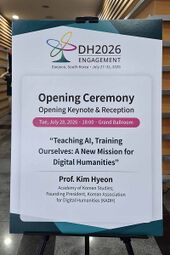 DH2026 Opening Ceremony
 -
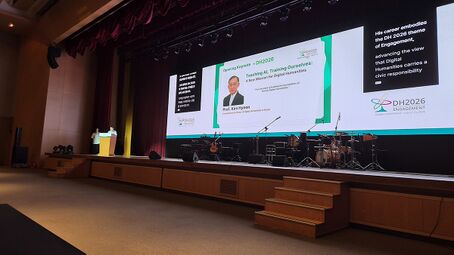 DH2026 Opening Ceremony
 -
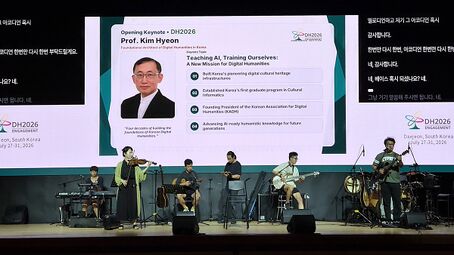 DH2026 Opening Performance
 -
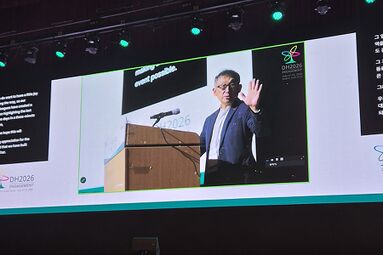 DH2026 Opening Keynote
 -
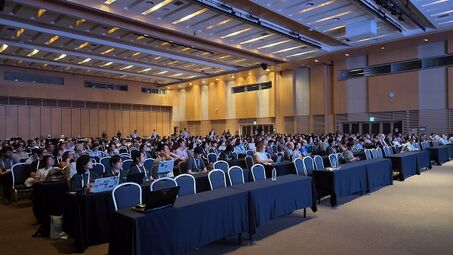 DH2026 Opening Keynote
 -
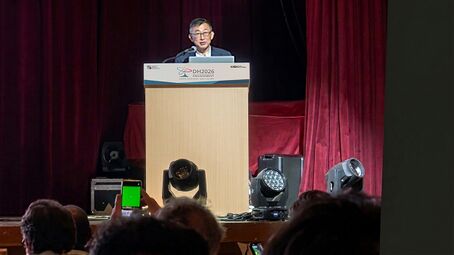 DH2026 Opening Keynote
 -
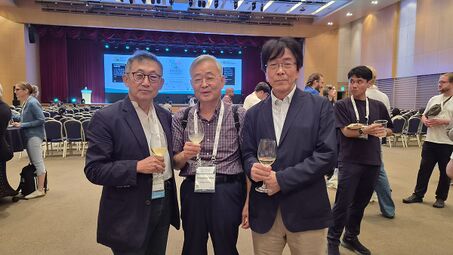 DH2026 Friends
 -
 DH2026 Friends
 -
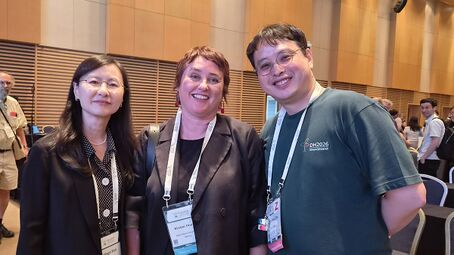 DH2026 Friends
 -
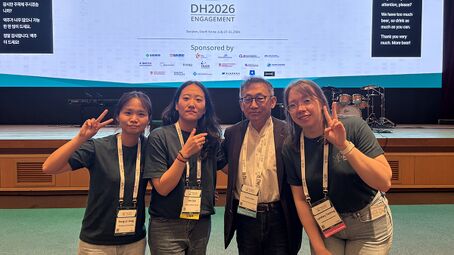 DH2026 Friends
 -
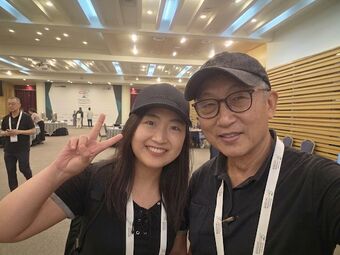 DH2026 Friends
 -
 DH2026 Friends
 -
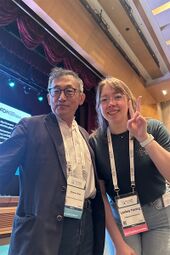 DH2026 Friends
 -
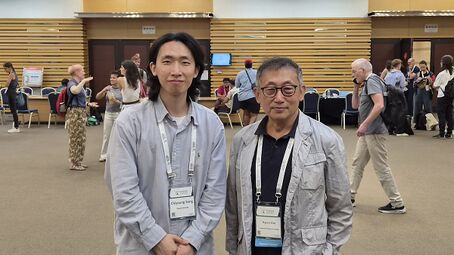 DH2026 Friends
 -
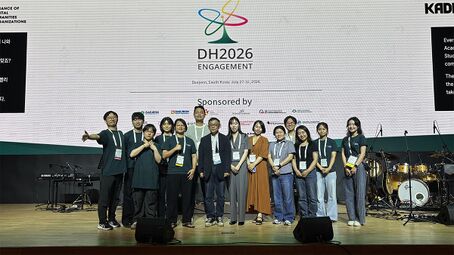 DH2026 AKS Family


